Share This Article
Common signs your pet has ringworm include bald patches, scaly skin, redness, and broken hairs. Because ringworm is highly contagious to other pets and even people, avoid close contact until your veterinarian confirms the diagnosis. Prompt veterinary care prevents the infection from worsening and reduces the chance of infecting others.
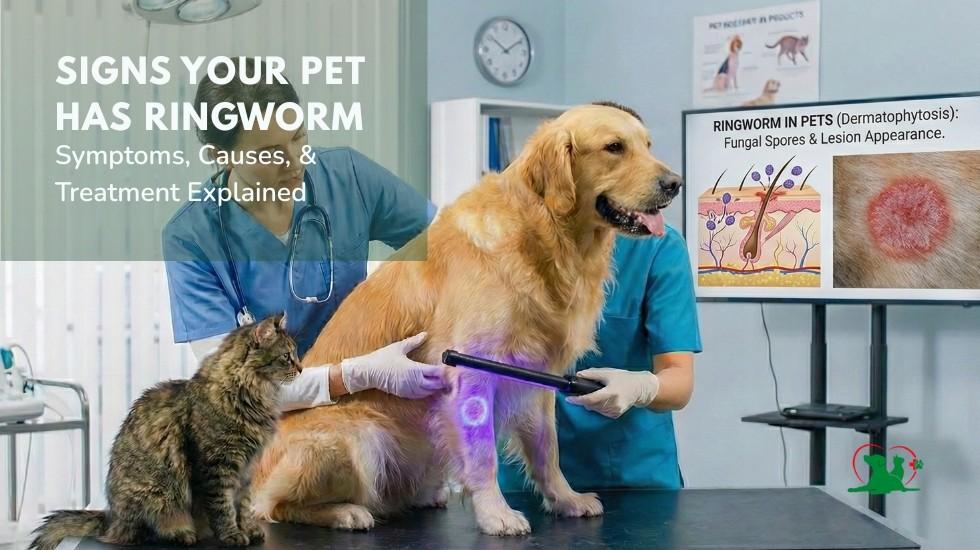
Is your pet scratching more than usual? Notice any weird, circular bald patches appearing out of nowhere? This can be one of the signs your pet has ringworm. But don’t panic! Despite the name, it’s neither a “worm” nor caused by any worm. It’s actually a fungal infection. The medical name is “dermatophytosis”.
It affects the skin, hair, and sometimes nails. It’s a very contagious fungal infection pets commonly experience, and can spread quickly between animals and even to humans. Knowing the signs can help you get your pet treated quickly and prevent the spread to other pets or family members.
Key Takeaways
- Ringworm is a contagious fungal infection that affects a pet’s skin, hair, and sometimes nails, and it can spread between pets, people, and household surfaces.
- Common signs your pet has ringworm include circular hair loss, dry or flaky skin, brittle hair, and nail changes that support early pet ringworm identification.
- Young pets, long-haired breeds, and animals and humans with weaker immune systems are more likely to get infected and spread the fungus.
- Ringworm can’t be confirmed by sight alone and often requires tests like Wood’s lamp exams, fungal cultures, or PCR testing for accurate diagnosis.
- Successful treatment combines topical or oral medication, strict cleaning, isolation when needed, and completing the full treatment period to prevent reinfection.
How to Know If Your Pet Has Ringworm?
Ringworm looks different in pets than it does in humans. The good news is that ringworm has some pretty recognizable signs once you know what to look for. Here are the key ringworm symptoms in dogs and cats that might indicate your pet has ringworm, so that you can surely go for pet ringworm treatment:
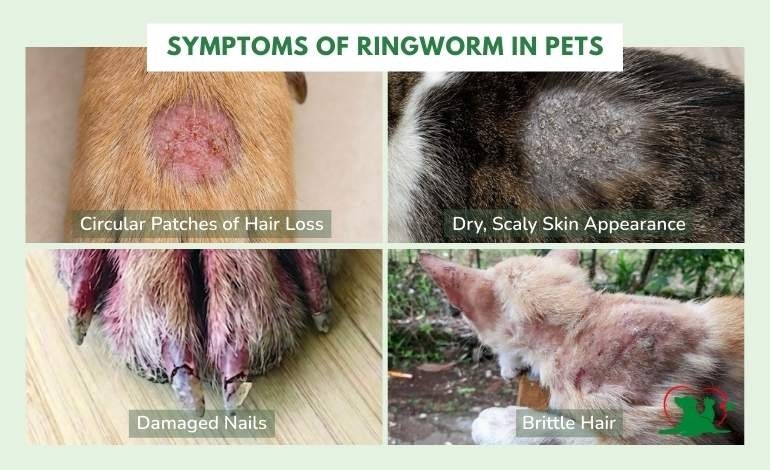
1. Circular patches of hair loss
The most common signs your pet has ringworm include circular patches of hair loss with red, scaly, or crusty skin. In dogs, these patches often appear on the head, paws, ears, and tail.
Cats often develop lesions on the face, temples, and ear margins. Young cats might first show symptoms on the bridge of the nose before spreading to other areas.
2. Dry, scaly skin appearance
Dry, flaky, or gray skin is another indicator linked to ringworm symptoms in cats and dogs alike. Some pets develop what veterinarians call “miliary dermatitis,” which appears as tiny crusty bumps across the body. The affected areas usually aren’t very itchy, which differs from allergies or hot spots that cause intense scratching.
3. Brittle hair and damaged nails
Hair around the infected areas becomes brittle and breaks easily near the skin surface. Your pet’s nails might also become rough, broken, or deformed if the infection spreads there. In severe cases, particularly in cats with weakened immune systems, the infection can become widespread with secondary bacterial involvement.
4. Hidden carriers without symptoms
Some pets carry ringworm without showing any symptoms at all. These “asymptomatic carriers” can still spread the infection to other animals and people even though they look perfectly healthy.
How Does It Spread and Who Is Most at Risk for Ringworm?
Ringworm spreads through direct contact with an infected animal. It also spreads through contaminated items like bedding, brushes, toys, and furniture.
Learning how to know if your pet has ringworm early helps reduce environmental spread, as the fungus can survive in the environment for long periods. This makes cleaning and hygiene an important part of control.
▸ Some pets face a higher risk. Puppies and kittens are more vulnerable because their immune systems are still developing. Long-haired breeds like Yorkshire Terriers and Persian cats trap fungal spores in their coats more easily.
▸ People with weakened immune systems and young children face a higher risk of infection. Ringworm in humans usually causes itchy, circular rashes on the skin.
Diagnosing Ringworm in Pets: How Can You Tell if Pets Have It?
Visual examination alone isn’t reliable for diagnosing ringworm. At Jurupa Hills Animal Hospital, ringworm testing is part of the comprehensive pet care services we use to confirm the infection.
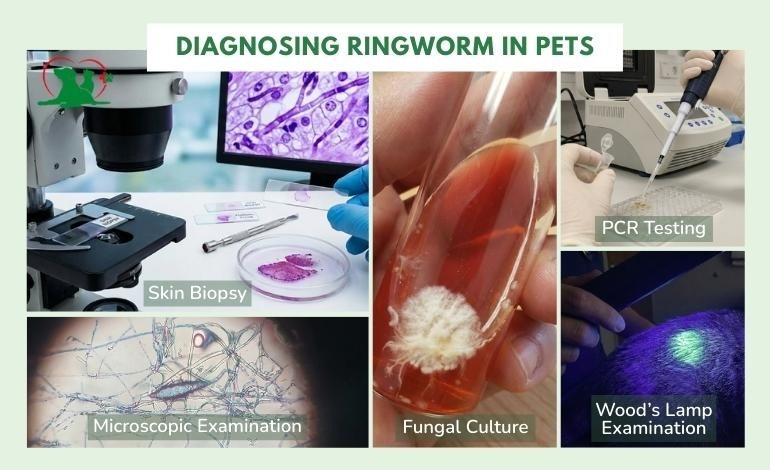
1. Wood’s Lamp examination
This provides quick initial screening. This special ultraviolet lamp makes certain ringworm fungi glow apple-green under the light. About 50% of Microsporum canis infections will fluoresce, making this a useful first-line test.
However, other substances like topical medications can also glow, so further testing is often needed.
2. Microscopic examination
This exam of plucked hairs can reveal fungal spores on damaged hair shafts. This method works best when hair is collected from areas that glow under the Wood’s lamp. However, spores can be difficult to see, especially in darker hair.
3. Fungal culture
This remains the best for diagnosis. Your veterinarian collects hair and skin scales and places them on a special growth medium. The fungus takes about 10 to 14 days to grow, though some cases require up to three weeks. This test not only confirms ringworm but also identifies the specific fungus species.
4. PCR testing
This offers faster results than culture. This newer method tests for fungal DNA and can identify the species involved. PCR testing works well for initial diagnosis, but can show positive results even after successful treatment because it detects dead fungal material along with live organisms.
5. Skin biopsy
For unusual or severe cases, a skin biopsy may be necessary. Special fungal stains help pathologists identify the infection in tissue samples.
How to Treat Ringworm in Pets?
Treatment of ringworm depends on the severity of the infection. Most cases require a combination of therapies.
- Topical treatments: These include medicated shampoos, creams, or lime sulfur dips. These reduce fungal spores on the skin and coat, and limit further ringworm pet skin lesion development.
- Oral antifungal medications: These may be prescribed for more serious cases. These medicines help clear an infection from inside the body. They’re vital in multi-pet households to reduce the risk of spreading zoonotic ringworm pets to humans.
- Cleaning: Environmental cleaning is essential. Bedding, toys, and surfaces should be cleaned and disinfected regularly. Vacuuming removes hair that may carry fungal spores. This plays a major role in pet ringworm treatment and prevention.
- Isolation: Infected pets may need temporary isolation to protect other animals and people. Treatment must continue for the full recommended time, even if the skin looks better early.
How to Prevent Ringworm From Spreading?
By making a few simple changes to your daily routine, you can protect the rest of your family and keep your home environment clean. Preventive habits like these are also important in broader parasite control, including heartworm prevention for cats.
Here are the most effective steps you can take to stop ringworm from traveling through your household:
- Keep infected pets isolated in a separate room away from other animals and people until treatment is complete.
- Wear long sleeves and gloves when handling your pet or applying medications. Always wash your hands thoroughly afterwards.
- Check all other pets in your household for signs of infection.
- Maintain good hygiene by vacuuming pet areas regularly and washing bedding frequently.
- Use veterinarian-recommended shampoos and ask about the appropriate bathing frequency for your specific pet.
Regular veterinary monitoring during treatment also highlights the importance of routine pet checkups to ensure the infection is fully resolved.
Ready to Clear Up That Itch? Schedule Your Visit Today!
Ringworm is a treatable condition, but early diagnosis makes a big difference. Clear signs, proper testing, and complete treatment protect pets and people. Preventive care visits help identify skin problems before they spread. Our trusted veterinary team at Jurupa Hills Animal Hospital can guide treatment and hygiene steps with confidence.
If you notice any ringworm symptoms in dogs and cats, or are still unsure how to know if your pet has ringworm, connect with us online, schedule an appointment, or call (+1) 909‑333‑1565 for timely veterinary care. We support faster recovery and safer homes.
Frequently Asked Questions
Share This Article

Written by : Jurupa Hills Animal Hospital
Jurupa Hills Animal Hospital is proud to serve the Fontana, CA area for everything pet-related. Our veterinary clinic and animal hospital is run by Dr. Avtar Gill, who is a licensed, experienced Fontana veterinarian. Our team is committed to educating our clients on how to keep your pets healthy year round, with good nutrition and exercise. Jurupa Hills Animal Hospital stays on top of the latest advances in veterinary technology and above all, remembers that all animals and pets need to be treated with loving care in every check-up, procedure, or surgery.
All Categories
- Pet Allergies
- Pet Dental
- Pet Euthanasia
- Pet Microchipping
- Pet Parasite
- Pet Routine Checkup
- Pet Surgery
- Pet Vaccination
- Spaying and Neutering
Related Articles

September 8, 2026