Share This Article
The signs your cat may be ready for euthanasia are usually changes in comfort, function, and daily behavior. Watch for pain that can’t be controlled, breathing difficulty, ongoing eating problems, trouble moving or grooming, withdrawal, and a pattern where difficult days consistently outnumber comfortable, enjoyable ones despite appropriate care.
Knowing the signs your cat may be ready for euthanasia isn’t always easy. You may notice that your cat isn’t eating as well, moving around as easily, or behaving like they used to, but you may still wonder what those changes mean. Some days may seem better than others, making the decision even harder.
Instead of looking for one definite sign, it helps to step back and consider how your cat is doing overall. This cat euthanasia guide explains the changes worth watching, how to think about your cat’s quality of life, and when a conversation with your veterinarian can help you decide what comes next.
Key Takeaways
➤ Your cat’s age alone doesn’t tell you when euthanasia may be appropriate.
➤ Look at comfort, eating, mobility, grooming, behavior, and enjoyment as a whole.
➤ Keeping track of good and difficult days can help you see changes more clearly.
➤ Treatment, comfort care, and hospice may still improve your cat’s quality of life.
➤ Talking with your veterinarian early can help you make a thoughtful choice without waiting for a crisis.
What Are the Signs Your Cat May Be Ready for Euthanasia?
A single symptom rarely answers this question about a pet euthanasia service. Instead, look for meaningful changes in how your cat functions from day to day. The following are signs a cat is suffering, which become more concerning when they persist, worsen, or prevent your pet from behaving normally and comfortably at home.

1. Persistent pain or discomfort that can’t be controlled
If you’re wondering, “How to know if my cat is in pain?”, start by watching for changes from their normal behavior. Cats in pain may become unusually quiet, hide more often, sit hunched, resist being touched, or stop jumping onto familiar surfaces. Some may become irritable or restless instead.
2. Eating and drinking problems that persist
A serious decline may show through ongoing loss of appetite, noticeable weight loss, repeated vomiting, diarrhea, or difficulty maintaining normal food and water intake. These changes can leave a cat weak and frail, particularly when they continue despite efforts to support normal nutrition and hydration.
3. Loss of mobility and difficulty with basic activities
You may notice your cat struggling to rise, walk, climb stairs, jump onto furniture, or reach favorite resting spots. A cat that once moved around the home freely may spend most of the day in one place because movement has become difficult, tiring, or uncomfortable.
4. Poor grooming, hygiene, or litter-box function
Cats normally spend considerable time grooming themselves. When illness, pain, weakness, or reduced mobility interferes, the coat may become unkempt or matted. You may also notice accidents, difficulty reaching the litter box, or soiling around where your cat rests.
5. Withdrawal, confusion, or loss of interest
A noticeable personality change can be significant. Your cat may stop greeting you, avoid familiar areas, hide for longer periods, or show little interest in people or surroundings. Crying, unusual restlessness, or confusion can also signal that something is wrong.
6. Bad days are consistently outweighing good days
Keep track of your cat’s daily experiences rather than relying on memory. If you’re asking yourself, “How do I know when it’s time to euthanize my cat?”, mark difficult days and better days on a calendar.
A growing pattern of days affected by discomfort, vomiting, distress, poor function, or other serious problems can reveal a decline that may be difficult to notice day by day.
7. Difficulty breathing or persistent breathlessness
Watch for obvious effort while breathing, rapid or labored breathing, repeated episodes of respiratory distress, or unusual stillness because moving seems to make breathing harder. Breathing problems can become serious quickly. If your cat is struggling to breathe, seek veterinary care promptly rather than waiting to see whether it improves.
※ Taken together, these changes can help you recognize the signs your cat may be ready for euthanasia, but they shouldn’t be viewed as a checklist to make end-of-life decisions for cats. What matters is how these problems affect your cat’s overall comfort and quality of life.
How to Assess Your Cat’s Quality of Life Scale Before Making a Decision
Seeing several changes in your cat can leave you wondering whether they’re temporary problems or signs of a deeper decline. Looking at your cat’s daily comfort and routine can help put those changes into perspective. The HHHHHMM framework gives you seven areas to consider as you assess how your cat is doing from day to day.
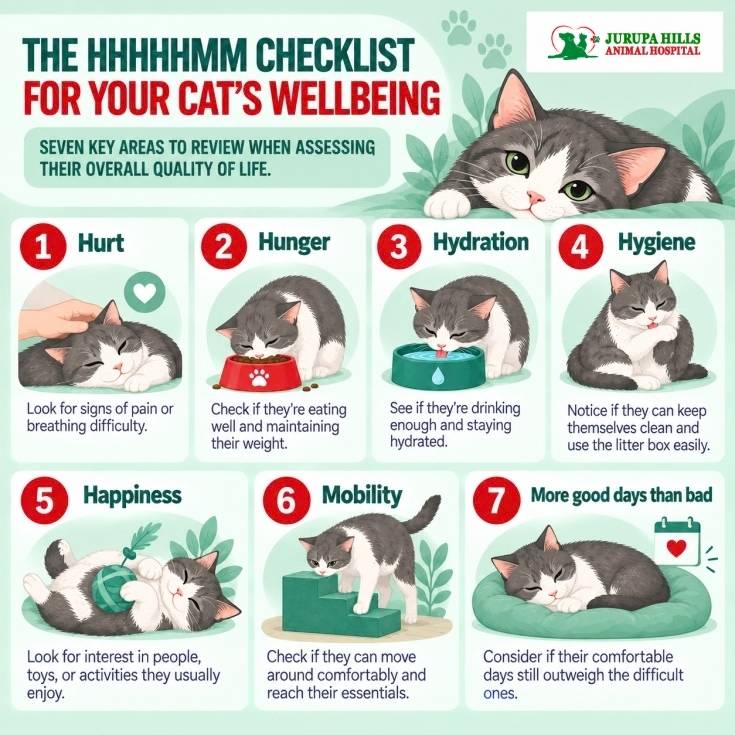
- Hurt: Is your cat’s pain controlled? Is breathing comfortable?
- Hunger: Is your cat eating enough to maintain strength?
- Hydration: Is your cat drinking enough and staying hydrated?
- Hygiene: Can your cat groom and keep clean after using the litter box?
- Happiness: Does your cat still show interest in you, other pets, or favorite activities?
- Mobility: Can your cat move around and reach food, water, resting areas, and the litter box?
- More good days than bad: Are comfortable, enjoyable days still more common than difficult ones?
Keep notes for several days when possible and compare them with your cat’s usual behavior. The framework can help you spot a pattern and give you an idea of how veterinarians assess a cat’s quality of life, but it shouldn’t be used as a stand-alone test for euthanasia.
Could Your Cat Still Benefit From Treatment or Comfort Care?
Seeing your cat struggle doesn’t always mean euthanasia is the only option. Depending on the cause, treatment or simple changes at home may improve comfort and daily function. Your veterinarian can help determine whether your cat still has reasonable options for supportive, compassionate pet care.
- Cat pain management: Appropriate pain control may improve comfort and mobility.
- Symptom control: Treatment may help with nausea, vomiting, dehydration, or other distressing signs.
- Nutrition and hydration: Your veterinarian may recommend support if your cat is struggling to eat or drink.
- Home adjustments: Moving food, water, resting areas, and litter boxes closer can make daily activities easier.
- Palliative or cat hospice care: These approaches focus on comfort when curing the disease is no longer the main goal.
When Should You Talk to Your Veterinarian About Humane Cat Euthanasia?
You don’t have to wait for a crisis to discuss euthanasia. Speaking with your veterinarian early can help you understand your cat’s condition, prognosis, and available options. It also gives you time to plan based on your cat’s needs rather than making a rushed decision.
Consider scheduling a veterinary visit when:
- You notice a steady decline: Your cat is no longer returning to their usual routine.
- You’re unsure what the changes mean: New symptoms may have treatable causes.
- You need to weigh treatment choices: Ask what treatment may accomplish and what care your cat may need at home.
- You want to plan ahead: Your veterinarian can explain what changes to watch for as your cat’s condition progresses.
Bring notes about changes in appetite, behavior, mobility, litter-box habits, and daily routines. These details can help your veterinarian assess your cat’s quality of life and guide the conversation.
What Happens If You Decide Veterinary Euthanasia Is the Kindest Choice?
Once you and your veterinarian decide euthanasia is appropriate, you may have questions about what happens during cat euthanasia, what your pet will experience, and what you’ll need to do. The pet euthanasia process is planned around your cat’s comfort, with the veterinarian explaining each step before proceeding.

- Discussion and preparation: Your veterinarian explains the procedure as you start preparing for cat euthanasia and answers any questions before treatment begins.
- Sedation: Your cat may receive medication to help them become relaxed and comfortable before the final medication.
- Euthanasia medication: Once your cat is comfortable, the veterinarian administers the medication that causes the heart to stop.
- Confirmation: The veterinarian checks your cat and confirms that they’ve passed.
- Private goodbye: You can spend time with your cat afterwards before leaving the hospital.
The exact steps can vary based on your cat’s condition and the veterinarian’s approach.
How to Make the Decision About Pet Euthanasia Without Feeling Like You Are Giving Up?
Age alone doesn’t determine when to euthanize a cat. Focus on your pet’s comfort, function, and enjoyment. Ask whether available care can provide comfort, and consider the overall pattern. Your veterinarian can help weigh prognosis, treatment response, and care needs.
Daily notes can show the trend. A thoughtful decision aims to protect your cat from prolonged, unmanageable suffering while respecting your bond and realistic care needs. If you’re uncertain, a veterinary conversation can help you decide what to do next.
Choose Your Cat’s End-Of-Life Care With Jurupa Hills Animal Hospital!
When you’re unsure whether your cat’s quality of life is declining, you don’t have to make this assessment alone. A veterinary visit can help identify what is treatable, discuss comfort-focused options, and explain whether euthanasia may be appropriate for your cat.
For families in Fontana and nearby communities, Jurupa Hills Animal Hospital provides veterinary care and euthanasia services with a focus on comfort and dignity. Bring your observations, notes, and questions to the conversation so our veterinary team can help you make an informed decision that puts your cat’s welfare first, with a plan suited to your cat.
Write to us here, schedule an appointment, or call (+1) 909-333-1565 today to get guidance about your cat’s changing quality of life.
Frequently Asked Questions (FAQs)
Share This Article

Written by : Jurupa Hills Animal Hospital
Jurupa Hills Animal Hospital is proud to serve the Fontana, CA area for everything pet-related. Our veterinary clinic and animal hospital is run by Dr. Avtar Gill, who is a licensed, experienced Fontana veterinarian. Our team is committed to educating our clients on how to keep your pets healthy year round, with good nutrition and exercise. Jurupa Hills Animal Hospital stays on top of the latest advances in veterinary technology and above all, remembers that all animals and pets need to be treated with loving care in every check-up, procedure, or surgery.
All Categories
- Pet Allergies
- Pet Dental
- Pet Euthanasia
- Pet Microchipping
- Pet Parasite
- Pet Routine Checkup
- Pet Surgery
- Pet Vaccination
- Spaying and Neutering
Related Articles

October 23, 2026
September 29, 2026