
Share This Article
The importance of pet dental care lies in protecting your pet from painful oral infections and disease. Regular brushing, professional cleanings, and routine dental exams help control plaque and tartar buildup. Good oral hygiene supports healthier teeth, fresher breath, and better overall well-being throughout your pet's life.
Tooth loss, jaw infections, heart damage. These are all things that start with ignored pet dental health in the USA. Most pet parents assume their companion would show signs if something hurt. They usually do not.
Your pet can eat normally, play fetch, and wag its tail while living with a mouth full of infected teeth. That’s how good pets are at hiding pain, which is why the benefits of regular dental check-ups for pets can’t be overstated.
This guide gives you a clear view of the most common dental problems in dogs and cats (backed by current pet dental health statistics), the subtle warning signs that point to trouble, what happens during a professional dental cleaning, and the best at-home habits to protect your pet’s teeth before problems start.
Key Takeaways
➤ Dental disease is extremely common in pets, with most dogs and cats showing signs by age three, even if they appear normal.
➤ Plaque and tartar buildup can lead to gingivitis, periodontal disease, tooth loss, and bacteria spreading to the heart, kidneys, and liver.
➤ Warning signs include bad breath, red gums, difficulty chewing, drooling, and behavior changes.
➤ Professional dental cleanings under anesthesia allow safe cleaning below the gumline to detect hidden disease.
➤ Daily brushing and VOHC-approved pet dental care products are essential to prevent long-term oral and systemic health problems.
What Is the Importance of Pet Dental Care?
Dental disease is one of the most common health problems in pets. According to the American Animal Hospital Association (AAHA), by the age of three, most dogs and cats have some degree of dental disease.
But the problem doesn’t stop in the mouth.
When bacteria build up on your pet’s teeth, they form plaque and tartar buildup in pets, a sticky film that hardens into tartar over time. If left untreated, that bacteria gets absorbed into the bloodstream. From there, it can damage the heart, kidneys, and liver.
So when you schedule a dental exam as part of regular pet dental care services, you’re protecting a lot more than just your pet’s teeth.
What Are the Most Common Dental Problems That Affect Pet Oral Health?
Because pets are naturally programmed to hide pain, dental diseases can quietly progress for a long time before they become obvious to us. This is a key concern in pet dental health in the USA. Staying informed about these issues is the first step in ensuring your companion stays comfortable and healthy:
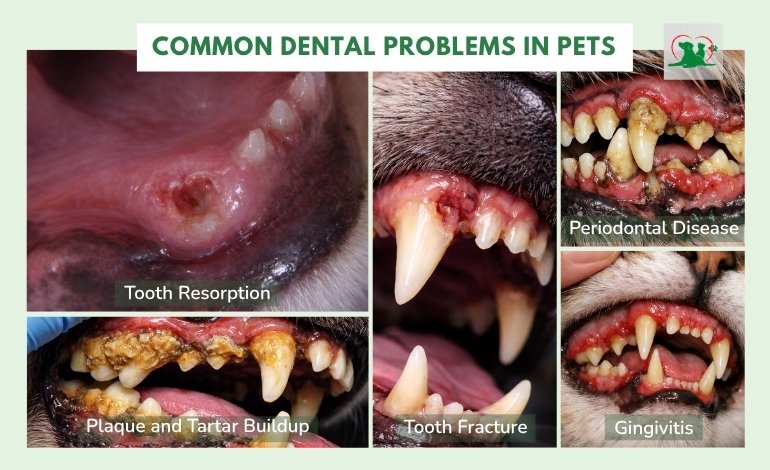
- Plaque and tartar buildup: Plaque forms daily on teeth. When it hardens, it becomes tartar, which only a professional can remove.
- Gingivitis: This is early gum inflammation. The gums turn red and may bleed. It’s painful, but it’s still reversible at this stage.
- Tooth resorption: This condition, common in cats, is when the tooth structure slowly breaks down from within.
- Tooth fractures: Hard chews like antlers or bones can crack your pet’s teeth. A cracked tooth can lead to deep infection.
- Periodontal disease: This is advanced gum disease that damages the tissues and bone around the teeth. By age 3, up to 80% of dogs and 70% of cats show signs of periodontal disease. This confirms the importance pet dental hygiene has in routine care.
These problems cause real pain. Pets are good at hiding it. Many pet parents only notice something is wrong when the disease is already severe.
What Are the Signs of Dental Disease in Pets?
As a pet parent, the responsibility falls on you to be a detective. By paying close attention to small changes in their habits and physical appearance, you can catch dental issues before they turn into major health crises. This is why vets often stress the importance of routine pet checkups for diagnosing problems early.
Here are the most common warning signs that your companion might be struggling with dental disease:
- Bad breath (halitosis): “Doggy breath” isn’t normal. It often signals bacterial buildup or infection.
- Difficulty eating or chewing: If your pet drops food, chews on one side, or avoids hard food, their mouth may be hurting.
- Red or bleeding gums: Healthy gums are light pink and firm. Red, swollen, or bleeding gums point to gingivitis or worse.
- Loose or missing teeth: This is a sign of advanced periodontal disease with bone loss underneath.
- Drooling or pawing at the mouth: These behaviors often signal oral pain or discomfort.
- Changes in behavior: Increased irritability or lower energy can be signs of chronic dental pain.
If you notice any of these signs, bring your pet in for an oral exam right away.
How Veterinary Dental Services Help Treat Dental Problems?
At Jurupa Hills Animal Hospital, our pet care services in Fontana include professional dental care using safe, proven methods, and we guide you in preparing a pet for a veterinary appointment so the process is smooth and safe.
- Professional dental cleanings for pets are done under anesthesia. AAHA recommends anesthesia for all pet dental procedures. It allows the vet to safely clean below the gumline, where bacteria cause the most damage.
Before anesthesia, your pet gets pre-surgical bloodwork to confirm they are healthy enough for the procedure. A trained team member monitors your pet’s vital signs throughout the cleaning.
- Tooth extractions are done when a tooth is too damaged to save. Our team uses local anesthetic nerve blocks to reduce pain during and after the procedure. Many pets recover quickly and feel much better once the painful tooth is gone.
- Pain management after dental procedures is a priority. Your vet will tailor a recovery plan specific to your pet’s needs.
What Are the Best Pet Dental Care Tips for At-Home Oral Hygiene?
While professional veterinary cleanings are essential for deep cleaning below the gum line, what you do in your home every day is the first line of defense for preventing pet dental disease. Here are the most effective pet dental care tips you can follow to maintain your companion’s oral health:
- Brush your pet’s teeth daily. Use a pet-safe toothpaste in flavors like chicken or peanut butter. Never use human toothpaste, as ingredients like xylitol are toxic to pets.
- Start slow. Let your pet sniff and taste the toothpaste first. Build up to full brushing over a few weeks.
- Use VOHC-approved products. The Veterinary Oral Health Council (VOHC) reviews and approves dental chews, water additives, and dental diets that are proven to work.
- Avoid very hard chews. Antlers, bones, and hard nylon toys can fracture teeth. If it doesn’t bend or give when you press it, it’s too hard.
- Feed dental-friendly diets. Some pet foods are designed to reduce plaque buildup as your pet chews.
Dental Disease Won’t Wait—And Neither Should You!
Dental disease is silent, painful, and preventable. By age three, most pets already show signs of it. This makes clear the importance pet dental hygiene has in overall health management. Bad breath, red gums, and difficulty chewing are warnings you should never ignore.
Daily brushing, VOHC-approved products, and professional cleanings are your best defense. What happens in your pet’s mouth affects their heart, kidneys, and liver, too. The stakes are high.
Jurupa Hills Animal Hospital provides comprehensive pet dental care in Fontana, including anesthesia-safe cleanings, extractions, and personalized at-home care guidance for dogs and cats. Contact us, schedule a dental exam, or call (+1) 909‑333‑1565 before small dental problems become serious health crises.
Frequently Asked Questions
Share This Article

Written by : Jurupa Hills Animal Hospital
Jurupa Hills Animal Hospital is proud to serve the Fontana, CA area for everything pet-related. Our veterinary clinic and animal hospital is run by Dr. Avtar Gill, who is a licensed, experienced Fontana veterinarian. Our team is committed to educating our clients on how to keep your pets healthy year round, with good nutrition and exercise. Jurupa Hills Animal Hospital stays on top of the latest advances in veterinary technology and above all, remembers that all animals and pets need to be treated with loving care in every check-up, procedure, or surgery.
All Categories
- Pet Allergies
- Pet Dental
- Pet Euthanasia
- Pet Microchipping
- Pet Parasite
- Pet Routine Checkup
- Pet Surgery
- Pet Vaccination
- Spaying and Neutering