Share This Article
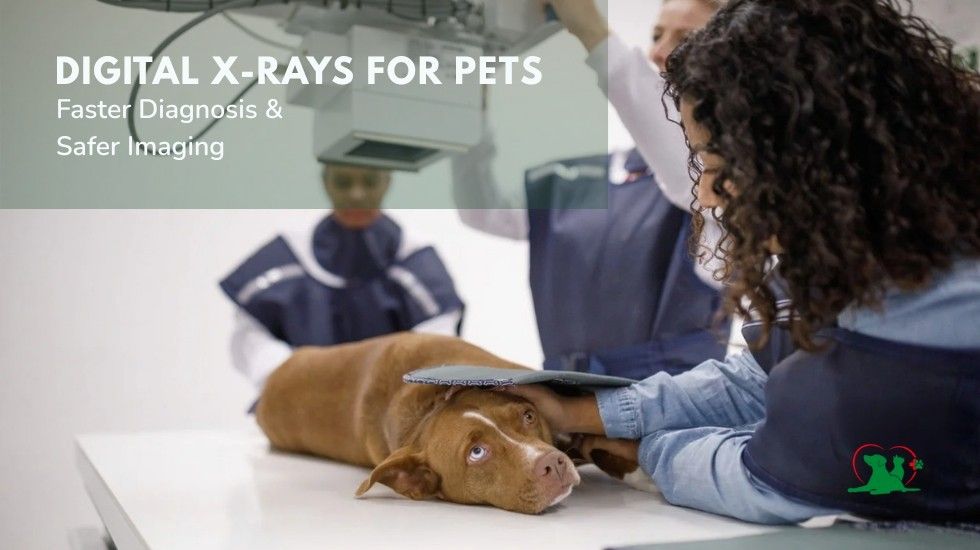
Digital x-rays for pets create detailed images of your cat or dog's bones, organs, and other internal structures. They use digital sensors to produce results within seconds. This allows for faster, accurate diagnosis, more effective treatment decisions, and long-term health management of your pet.
- Key Takeways:
- What Are Digital X-Rays for Pets and How Do They Work?
- What Are the Benefits of Pet Digital Radiography?
- What Can Pet Digital Radiography Detect?
- Veterinary Digital X-Ray vs Ultrasound vs CT/MRI: Which Test Is Right?
- What to Expect During Your Pet Digital Radiography Appointment at Jurupa Hills Animal Hospital?
- Don’t Let Symptoms Linger! Schedule a Pet Digital Radiography Today!
- Frequently Asked Questions
Key Takeways:
- Digital x-rays for pets help veterinarians get quick, clear images of your pet’s bones, chest, abdomen, and teeth. This speeds up diagnosis and cuts down on waiting times.
- Compared to traditional film X-rays, digital imaging offers better detail, lower radiation exposure, and fewer repeat scans.
- These X-rays help detect fractures, joint disease, lung issues, swallowed objects, dental problems, and some tumors.
- Digital images can be quickly shared with specialists, making second opinions and referrals easier when needed.
- Most pets don’t need sedation, and results are reviewed within minutes, so treatment decisions can begin right away.
Seeing your pet in pain or not acting like themselves can be heartbreaking. When your pet limps, coughs, or won’t eat, you want answers fast. Delays can make problems worse and worry you. Fortunately, pet digital radiography can reveal the cause quickly and help start treatment.
In this blog, we’ll explore what digital radiography is, its benefits, common uses, how it compares to other tests, and what to expect during an appointment at Jurupa Hills Animal Hospital.
What Are Digital X-Rays for Pets and How Do They Work?
Digital radiography, often called digital X-rays, uses electronic sensors to create images of your pet’s bones and organs and is commonly used during modern pet care services. The vet gets the picture almost immediately on a computer screen. That speed helps your pet because decisions can start right away.
Digital files are saved in DICOM or similar formats so vets can compare past and present images. Unlike old film x-rays, there’s no darkroom or chemical processing. That means fewer steps, clearer pictures, and faster sharing with specialists, including options like teleradiology for pets when a remote radiologist is needed.
In practice, digital radiography shows bones, lungs, abdomen, and teeth in detail. Veterinarians can zoom and adjust contrast to see minor problems. The images are often good enough to guide treatment without more tests, but vets sometimes combine imaging with your pet’s bloodwork or ultrasound for a complete diagnosis.
What Are the Benefits of Pet Digital Radiography?
Digital radiography helps your vet get clear, fast information so they can recommend the right steps for care. It makes appointments smoother and keeps records easy to access for future visits.
- Instant review: Vets see images seconds after capture, so diagnosis starts faster.
- Better image quality: Digital images are clearer and can be enhanced or zoomed.
- Fewer retakes: Better images mean fewer repeat X-rays and less stress for your pet.
- Lower radiation: Digital systems usually need less exposure than older film systems.
- Easier referrals: Files can be shared quickly with specialists for second opinions.
- Long-term storage: Digital images are saved for future comparison and follow-up.
What Can Pet Digital Radiography Detect?
Pet digital radiography is a non-invasive imaging technique that generates detailed internal images. This assists veterinarians in evaluating your pet’s overall health, monitoring conditions timely, and guiding clinical decisions regarding the following cases:
- Fractures and bone injuries: Identify breaks, alignment problems, and arthritis.
- Joint disease: Shows hip dysplasia, elbow dysplasia, and chronic joint changes.
- Chest issues: Detects pneumonia, fluid in the lungs, and some heart size changes – a reason many pet parents look for “pet X-ray near me” when respiratory signs appear.
- Abdominal problems: Find swallowed foreign objects, bladder stones, and some masses.
- Dental issues: Dental X-ray for pets reveal root disease and bone loss beneath the gum.
- Certain tumors: Show abnormal masses but may need an ultrasound or biopsy for confirmation. When additional details are required, vets compare options in veterinary ultrasound vs X-ray to choose the best next step.
Veterinary Digital X-Ray vs Ultrasound vs CT/MRI: Which Test Is Right?
Here’s a quick overview of the main veterinary imaging options, explaining what each test is good for, whether sedation is usually needed, and how long results take generally. This will help you follow your vet’s recommendation and know what to expect.
| Modality | Best For | Sedation/Anesthesia | Turnaround Time |
| Digital X‑ray | Bones, chest, dense foreign objects | Often none; mild sedation if needed | Minutes for images and initial review |
| Ultrasound | Soft tissues: liver, kidneys, bladder, heart | Usually none; sometimes mild sedation | Same day; exam performed in real time |
| CT | Complex bone detail, head, chest, body tumors | Often required (keeps pet still) | Same day to a few days (depends on facility) |
| MRI | Brain, spinal cord, soft tissue detail | Usually required (long scan times) | Same day to several days (specialty centers) |
How do vets choose the test?
Vets start with the test that answers the main question quickly and safely. For broken bones or suspected swallowed items, they often pick X-rays first. If more details about the organs are needed, they’ll refer for an ultrasound. For complex brain or spine issues, a CT or MRI referral by Jurupa Hills Animal Hospital is best.
Combining these tests gives the clearest answer when one test isn’t enough, and illustrates the broader veterinary imaging benefits of multimodal diagnostics.
What to Expect During Your Pet Digital Radiography Appointment at Jurupa Hills Animal Hospital?
Here’s what happens during a pet digital radiography visit at our hospital:
- Check-in and quick history: When you arrive, the hospital staff asks you focused questions about symptoms, duration, recent changes, medications, prior injuries, and behavior of your pet.
- Brief physical exam: The veterinarian performs a short hands‑on exam to localize the problem, assess pain, and check vital signs such as heart rate and respiration.
- Positioning and capture: A trained technician gently positions your pet for each required view using cushions, towels, sandbags, or a handler as needed.
- Fast review: Digital X‑rays appear on the monitor within seconds, allowing immediate review for fractures, foreign bodies, chest or abdominal concerns, and dental issues.
- Next steps: After review, the vet explains findings in plain language and outlines recommendations—treatment, additional diagnostics like bloodwork or ultrasound, or specialist referral. You’ll get clear follow‑up instructions and can request image copies.
If you’re concerned about sedation and safety while you prepare your pet for the vet, then rest assured. Many routine body X-rays don’t require full anesthesia. If your pet is anxious, painful, or needs exact positioning, mild sedation may be used.
Dental X-rays or very stressed animals sometimes require sedation to keep them safe and still (common with detailed cat X-ray imaging and some dog X-ray digital procedures).
Don’t Let Symptoms Linger! Schedule a Pet Digital Radiography Today!
Digital radiography for pets gives quick, clear answers for bone, chest, abdominal, and dental issues, often reducing repeat scans and radiation. At Jurupa Hills Animal Hospital, you’ll have peace of mind knowing that you’ll get clear answers promptly when your pet’s health is in question.
Vets here often combine low-radiation pet imaging with ultrasound or blood tests for a full diagnosis. If your pet shows pain, limping, or sudden changes in appetite or breathing, act quickly.
Contact us online or call us at (+1) 909-333-1565 to learn more about how digital X-rays can improve your pet’s veterinary experience, ask about pet X-ray cost, or request same-day pet X-ray service. Schedule your pet’s next wellness examination with us or visit our office at Sierra Ave. Fontana, California. Let’s help your pet stay well!
Frequently Asked Questions
Share This Article

Written by : Jurupa Hills Animal Hospital
Jurupa Hills Animal Hospital is proud to serve the Fontana, CA area for everything pet-related. Our veterinary clinic and animal hospital is run by Dr. Avtar Gill, who is a licensed, experienced Fontana veterinarian. Our team is committed to educating our clients on how to keep your pets healthy year round, with good nutrition and exercise. Jurupa Hills Animal Hospital stays on top of the latest advances in veterinary technology and above all, remembers that all animals and pets need to be treated with loving care in every check-up, procedure, or surgery.
All Categories
- Pet Allergies
- Pet Dental
- Pet Euthanasia
- Pet Microchipping
- Pet Parasite
- Pet Routine Checkup
- Pet Surgery
- Pet Vaccination
- Spaying and Neutering
Related Articles

September 7, 2026
September 8, 2026