Share This Article
Your veterinarian determines when your cat is ready to return home after surgery. Picking up cat after spay involves learning about medications, feeding, and incision care before leaving. Proper aftercare helps your cat heal properly over the next two weeks. Careful observation helps you recognize potential warning signs and reduce complications at the earliest.
- When Is the Right Time for Picking Up Cat After Spay?
- What to Expect After a Vet Spay Procedure Fontana Before You Leave the Clinic?
- How Will Your Cat Behave After Spay Surgery?
- How Should You Handle Bringing Cat Home After Spay Surgery?
- What to Expect After Cat Spay at Home: The First 6 to 24 Hours
- Spay Surgery Recovery Timeline for Cat: What Happens Each Day
- Cat Spay Complications Symptoms: When Should You Call The Veterinarian?
- Your Cat’s Best Recovery Starts With the Right Care!
Bringing your cat home after a spay is a relief, but it can also feel overwhelming fast. She looks different, she’s acting differently, and you’re not always sure what’s normal and what isn’t. The last thing you want is to miss something important while she’s healing.
This cat surgery aftercare guide is here to help you feel more prepared and less anxious. You’ll find everything from the pickup process and cat spay discharge instructions to the first 24 hours of cat spay recovery, a clear day-by-day recovery timeline, and the warning signs that should never be ignored.
Key Takeaways
- Most cats are discharged a few hours after spay surgery once they are awake, stable, and able to walk, although mild grogginess may still be expected.
- The first 24 hours of cat spay recovery may include sleepiness, reduced appetite, disorientation, vocalization, and minor swelling around the incision as the anesthesia wears off.
- Proper cat spay aftercare requires a calm environment, restricted activity, careful incision monitoring, and consistent use of prescribed medications and protective collars.
- Most cats gradually return to normal within 10–14 days, but jumping, running, and excessive activity should be restricted during the healing period.
- Warning signs such as incision discharge, persistent vomiting, breathing difficulties, severe lethargy, or refusal to eat require prompt veterinary attention.
When Is the Right Time for Picking Up Cat After Spay?
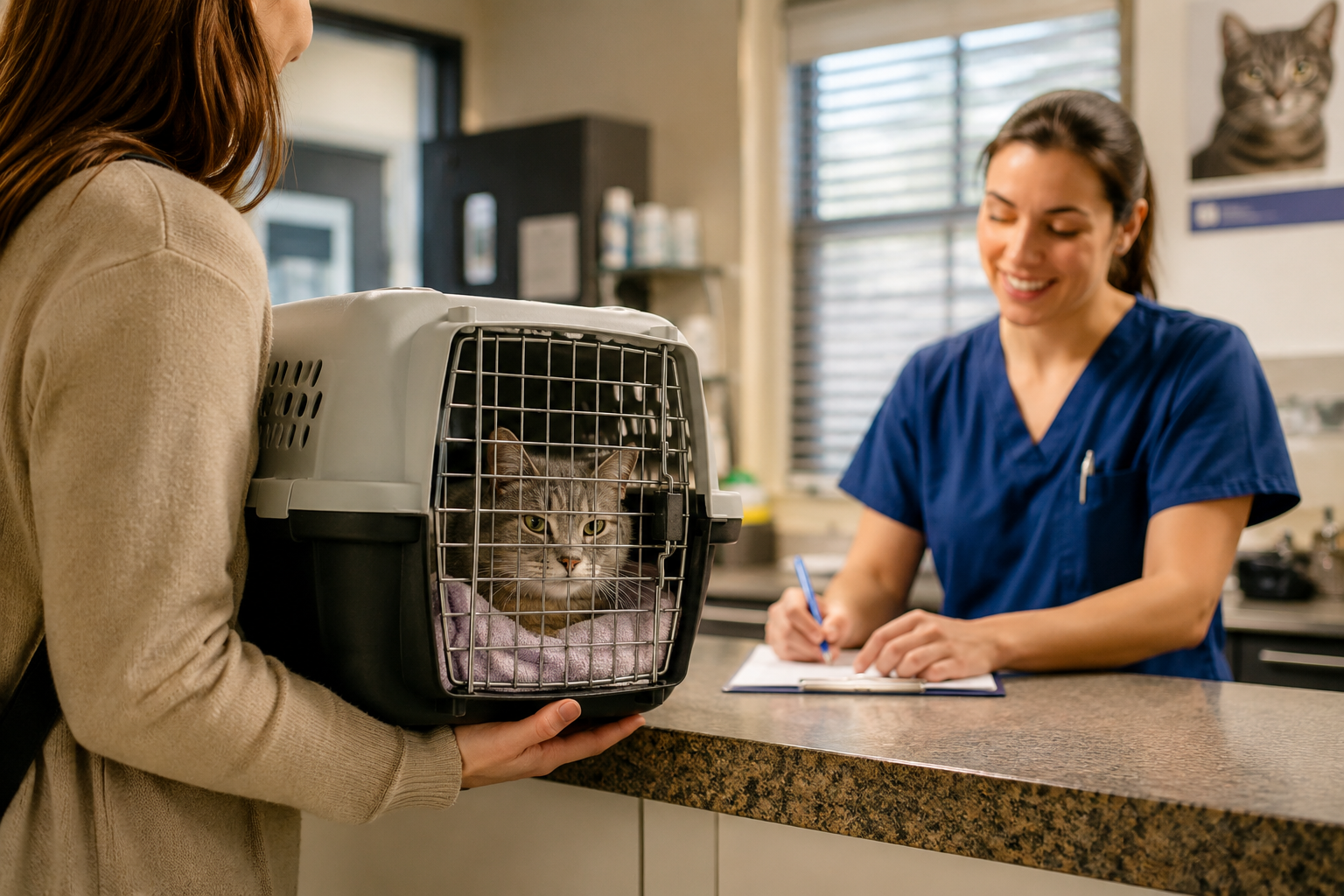
A pet owner receives discharge instructions while picking up her cat after a successful spay procedure at a Fontana veterinary clinic.
The exact pickup window is strictly determined by your specific clinic. However, most veterinary clinics discharge spayed cats in the late afternoon (usually between 3:00 PM and 5:00 PM), provided the cat is fully awake, her vital signs are stable, and she can walk unassisted.
The ideal pickup strategy
1. Wait for the call: The clinic will monitor your cat’s emergence from pet anesthesia and call you with a precise pickup time once she’s ready.
2. Don’t rush: Picking up a cat too early can result in an overly groggy, stressed, and nauseous cat that’s more prone to injuring herself. This is why we emphasize the importance of spaying and neutering safely.
3. Don’t be late: Many clinics operate as high-volume centers and don’t have overnight staff. Arriving late often incurs hefty penalty fees or forces you to deal with an emergency referral clinic. Being aware of these potential additional charges is an important part of managing the overall cat spay cost.
What to expect at pickup
- Discharge process: Plan for about 15 to 30 minutes at the desk so staff can go over pain medications and your cat spay aftercare Fontana instructions for home.
- Physical state: Your cat will still be slightly sedated. Expect her to be glassy-eyed, wobbly, and potentially vocal or shivering.
What to Expect After a Vet Spay Procedure Fontana Before You Leave the Clinic?
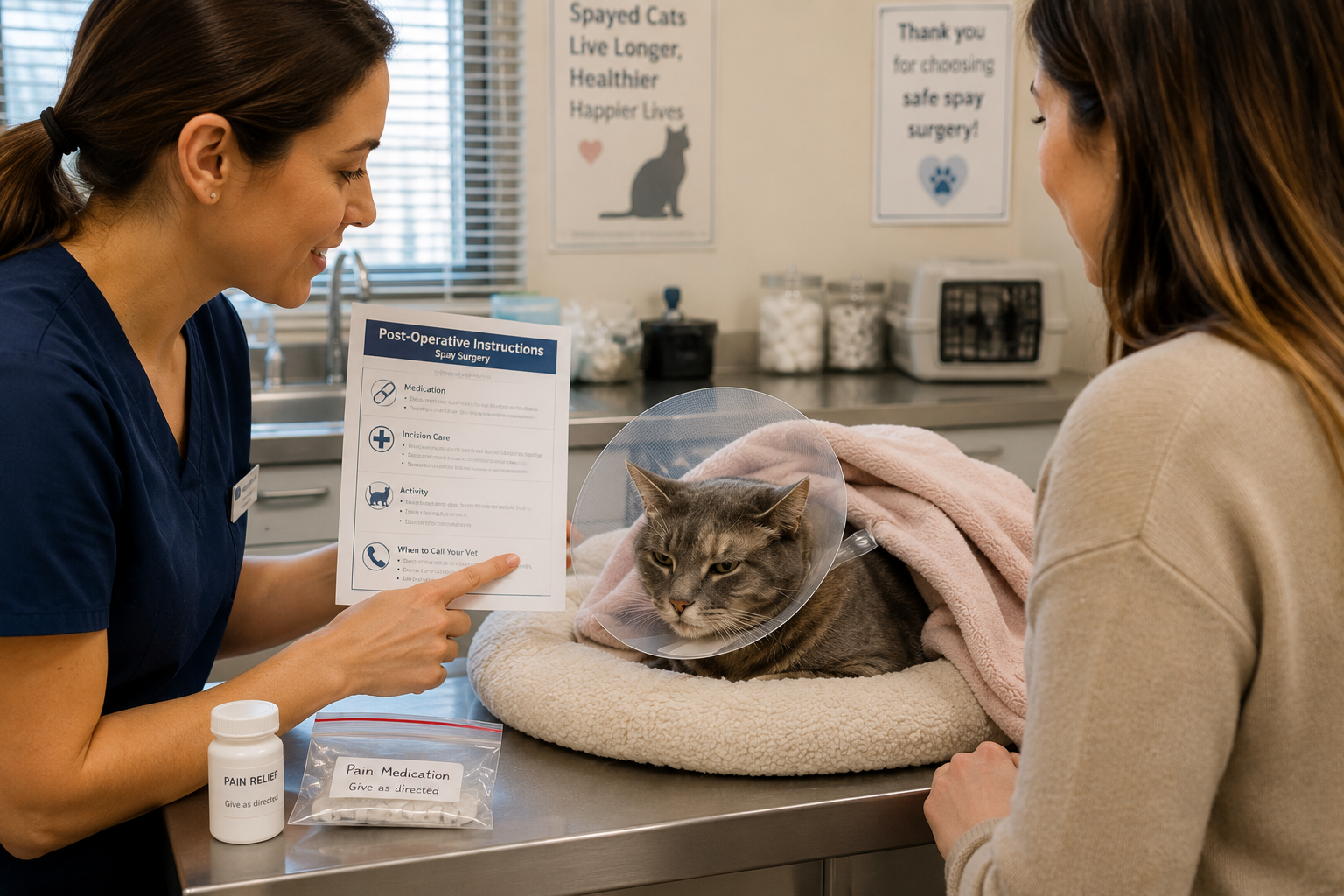
A veterinarian reviews post-operative care, medication, and recovery instructions with a cat owner before discharge after a spay procedure.
Before you leave the clinic, we take the time to walk you through exactly what has happened and what the next few days will look like. This transition period is designed to give you peace of mind and provide your pet with the best possible start to their healing process. Here’s what to expect after a cat spay during that final check-in.
1. Post-op instructions: You will receive detailed cat spay discharge instructions on medication schedules, pet pain management, and when to call the vet.
2. Surgical site check: Vets often check the incision (often sealed with glue or internal stitches) to ensure it is clean and dry.
3. Anesthesia effects: Your cat may still be quite sleepy, lethargic, or, conversely, vocal/irritable due to the anesthesia wearing off.
4. Identification tattoo: A small green, inked line or dot, which is a tattoo placed near the incision to indicate the cat has been sterilized as part of the spaying and neutering services.
5. Elizabethan collar/cone: You may be advised to have your cat wear a protective cone (e-collar) to prevent licking.
How Will Your Cat Behave After Spay Surgery?
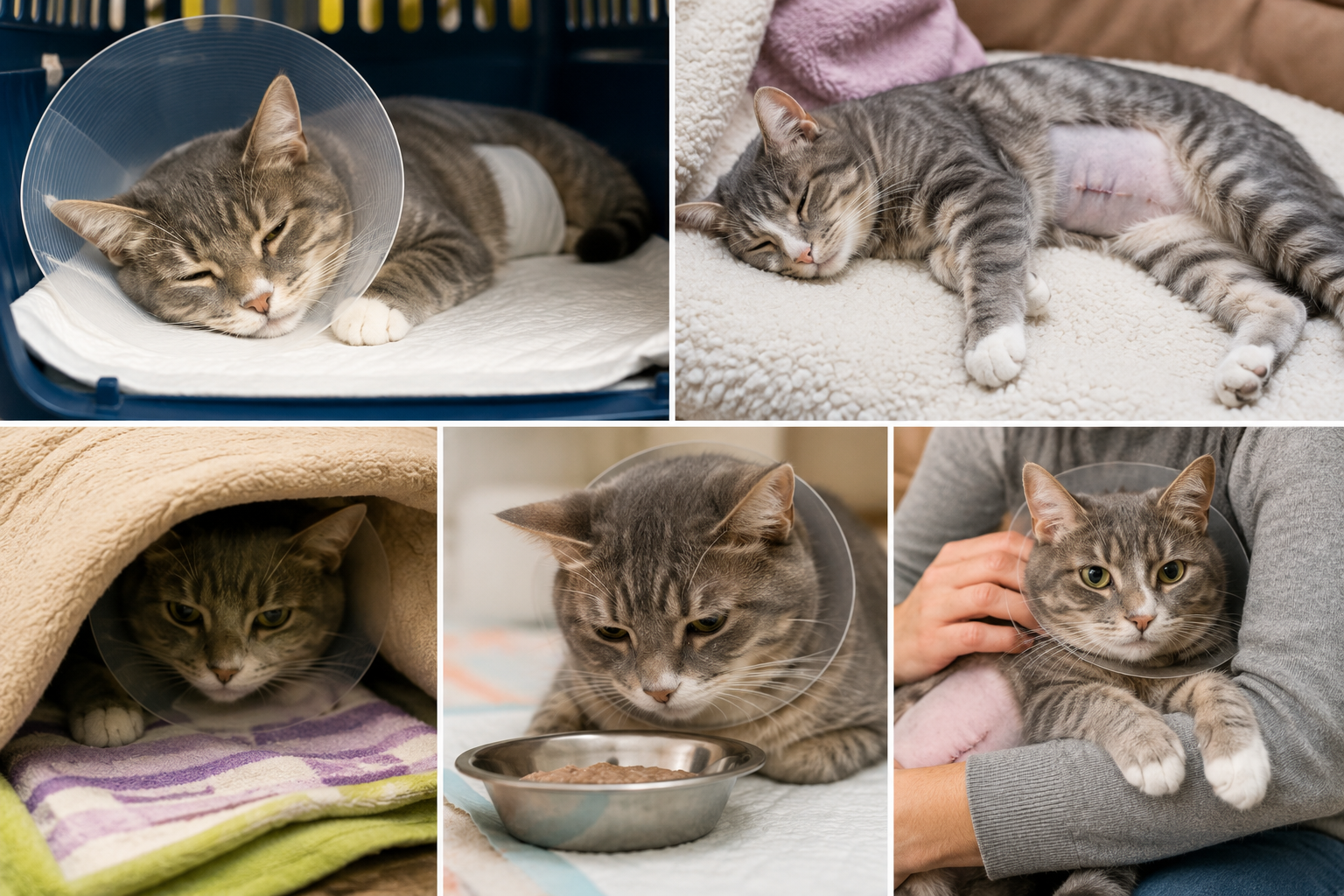
A cat rests comfortably during recovery after spay surgery while wearing a protective e-collar and healing from the procedure.
You might think, “How long before cat acts normal after spay?”, especially when behavior changes are most noticeable. Because every cat has a unique personality, they’ll each process the recovery differently. Here are the most common behaviors you can expect from your cat during the first day or two of their recovery before everything returns to normal:
1. Grogginess and confusion: The effects of anesthesia can last 12–24 hours, leading to disoriented behavior or wobbly walking.
2. Lethargy/Sleep: They’ll likely sleep more than usual as their body heals.
3. Irritability or clinginess: Some cats may hide or become withdrawn, while others become more affectionate, requiring extra comfort due to pain or confusion.
4. Low appetite: A minor decrease in food intake for the first day or two is common.
5. Discomfort: Your cat may cry, whine, or behave defensively if handled near the incision. This is why careful post spay care for cats is very important.
How Should You Handle Bringing Cat Home After Spay Surgery?
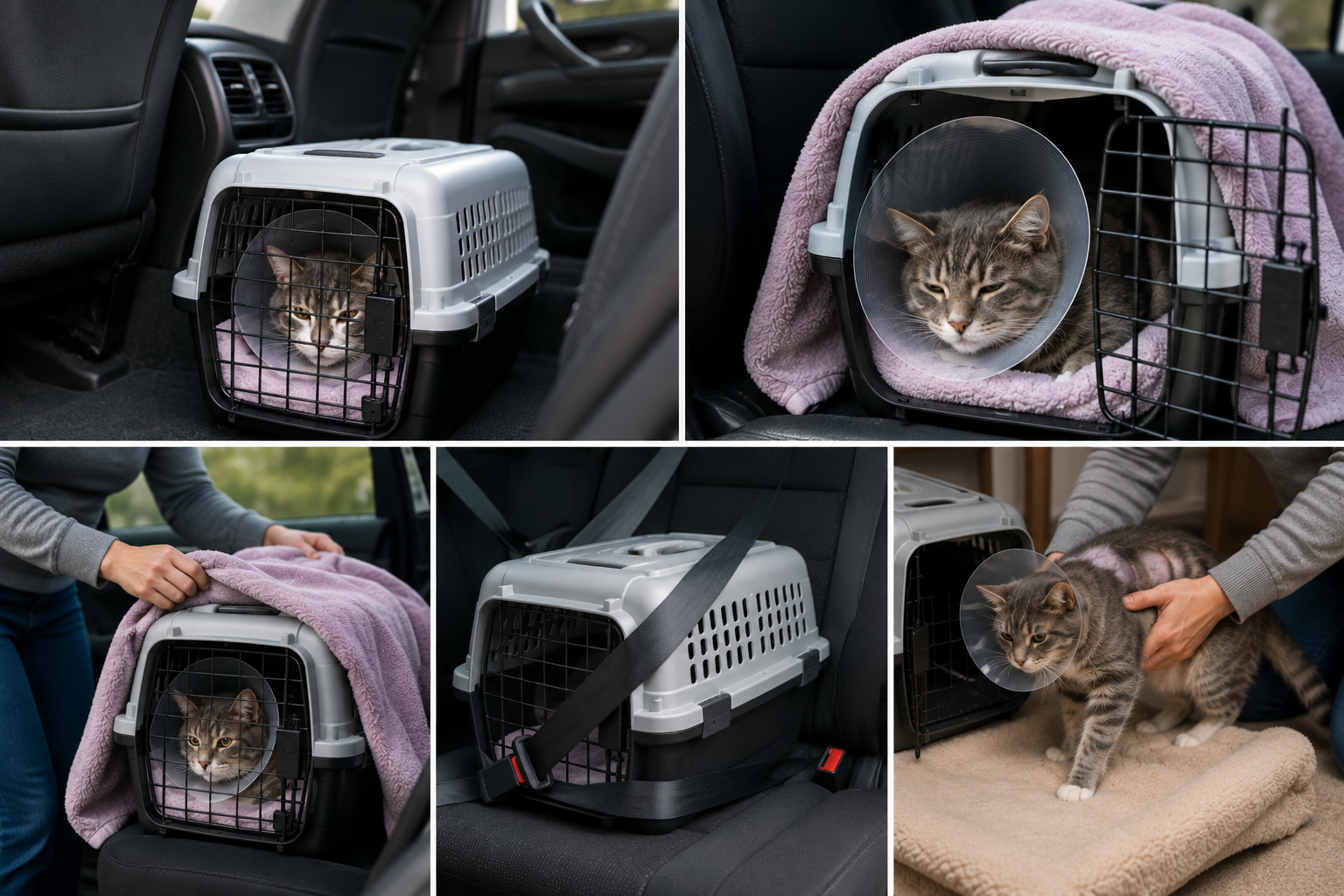
A cat travels safely in a secure carrier after spay surgery, helping reduce stress and protect the surgical incision during the trip home.
By focusing on a few key steps during the car ride and the walk into your house, you can ensure they remain comfortable and secure. These steps help support safe post spay care for cats from the moment you leave the clinic. Here are the best ways to manage that first trip home:
1. Secure carrier: Use a sturdy carrier that allows the cat to stand and turn around, but isn’t too large.
2. Location: The safest spot in the car is often on the floor behind the front seats, which prevents the carrier from sliding during braking.
3. Environmental control: Keep the car at a comfortable temperature, avoiding extreme heat or cold.
4. Calm environment: Cover the carrier with a blanket or towel to reduce anxiety from seeing outside, and consider using calming pheromone sprays.
5. Before/After: Ensure the carrier is securely latched. For nervous cats, place them in the carrier using a towel wrap for security.
What to Expect After Cat Spay at Home: The First 6 to 24 Hours
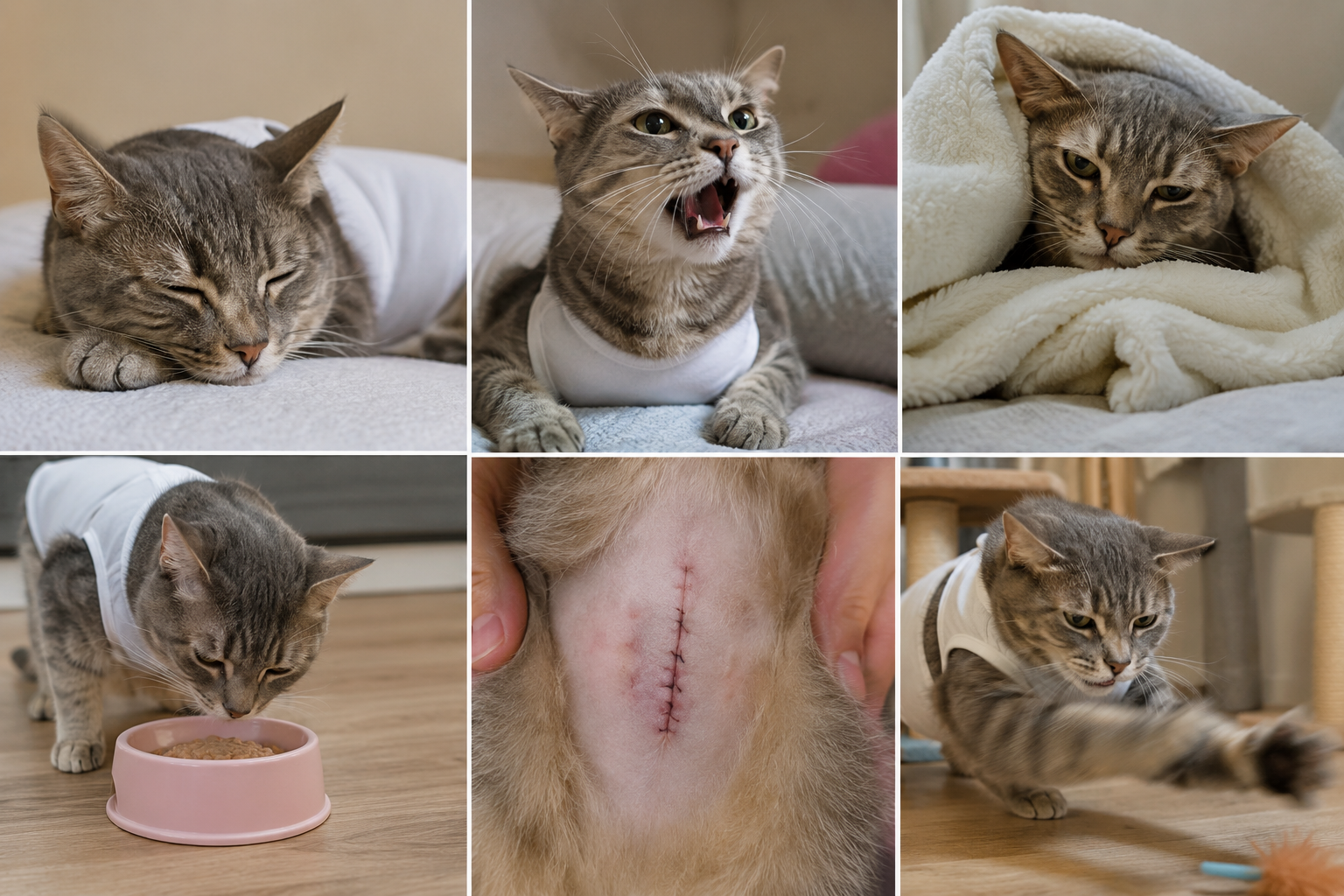
A cat recovers comfortably at home after spay surgery, showing common first-day behaviors such as sleeping, eating lightly, and incision healing.
The first day back from the clinic is often the most challenging part of the recovery process for both you and your cat. Here’s what you can expect during those first twenty-four hours:
1. Grogginess/Drowsiness: The cat may sleep heavily, appear disoriented, or walk unsteadily. This stage often answers the common question about how long are cats sleepy after spay during the early recovery period.
2. Vocalization/Irritability: She may cry, howl, or growl as the anesthesia wears off.
3. Temperature sensitivity: Shivering or seeking warmth is common.
4. Appetite changes: Nausea is likely; a reduced appetite for the first 24 hours is normal.
5. Incision site: Expect mild bruising, slight redness, or minimal swelling around the stitches.
6. Behavioral changes: Some cats may act strangely, claw at invisible objects, or be aggressive during recovery.
Spay Surgery Recovery Timeline for Cat: What Happens Each Day
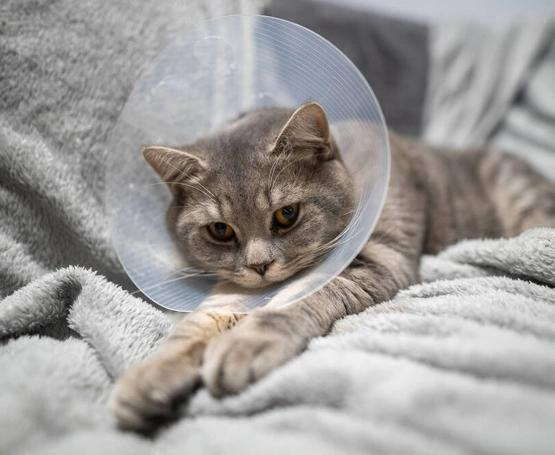
A cat resting comfortably with a recovery cone after spay surgery during the early stages of post-operative healing.
Understanding the daily milestones of healing can help you know when to worry and when to simply let her rest. Most cats follow a predictable path as they heal, and having a clear idea of what to expect helps ensure that she stays on track for a safe and complete recovery.
- Day 1 (immediate post-op): Your cat will be drowsy, wobbly, or disoriented from anesthesia. This is normal during the first hours after picking up cat after spay. Keep her in a warm, quiet, confined space (like a large crate or small room). Offer only half her normal food and water, as she may feel nauseous.
- Day 2: Appetite should return to normal. Activity should still be very restricted to prevent stretching the incision.
- Days 3–5: Energy levels increase; your cat may feel well enough to try jumping. Continue to prevent jumping and running to avoid opening the incision.
- Days 6–10: The incision site is healing, but the skin is still delicate. Keep observing for redness, swelling, or discharge.
- Days 11–14: Most cats are fully healed, and this is usually when stitches or staples are removed. Once the vet confirms the site is closed, normal activity can resume.
Cat Spay Complications Symptoms: When Should You Call The Veterinarian?
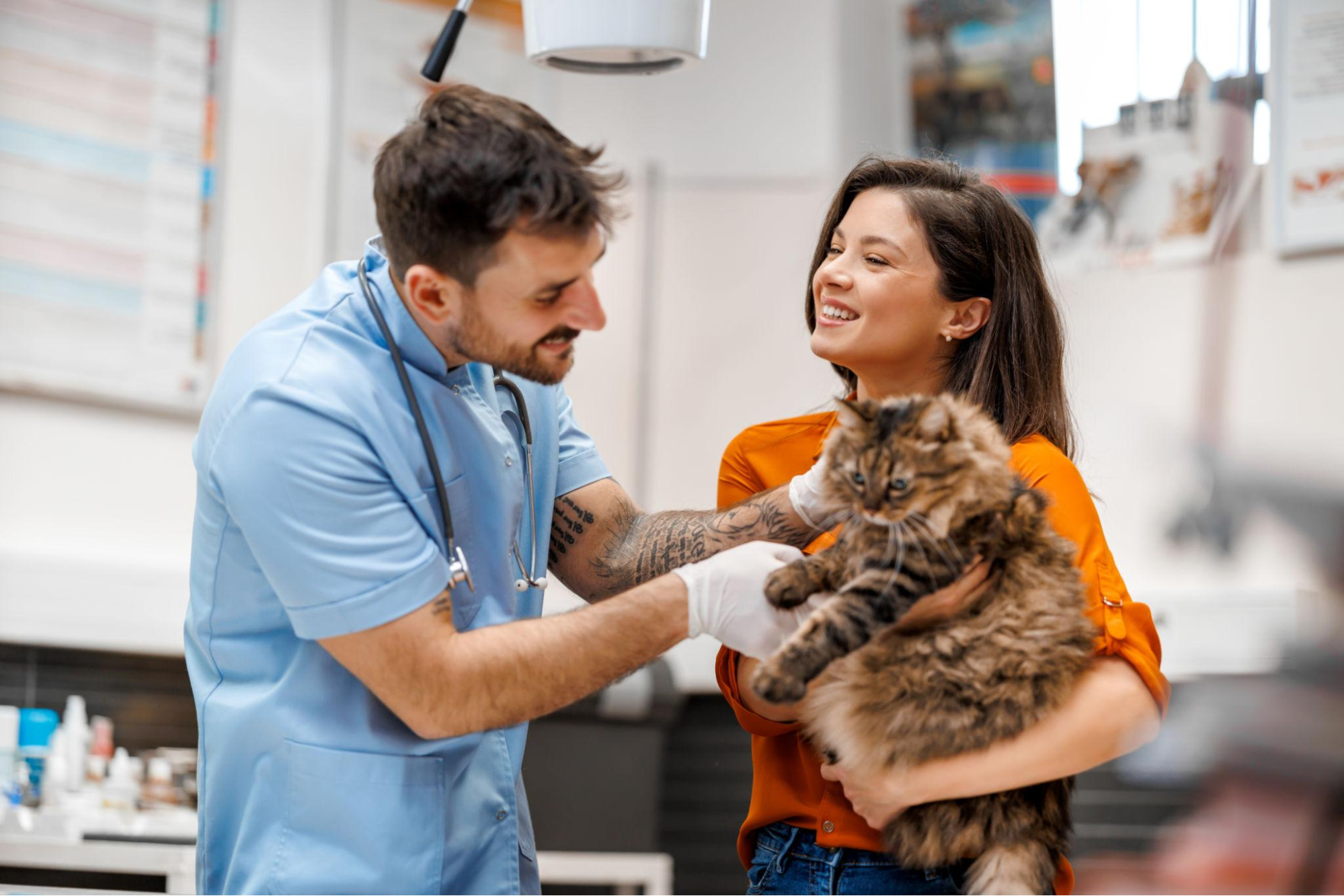
A veterinarian performs a post-spay examination to ensure a cat is healing properly and to identify any signs of complications.
Catching a problem early can prevent a minor issue from becoming a serious health risk. Paying attention to proper cat incision care after spay can help you notice warning signs of infection after spay quickly. You should reach out to your veterinarian immediately if you notice any of the following symptoms:
1. Incision issues: The incision is bleeding, has opened (gaping), or has foul-smelling discharge.
2. Persistent vomiting: Vomiting more than once or continuing into the second day.
3. Refusal to eat/drink: No interest in food or water 24 hours post-surgery.
4. Severe lethargy: The cat is unresponsive, unable to stand, or lethargy worsens rather than improves.
5. Breathing difficulties: Labored or heavy breathing.
6. Pain/Behavior: Excessive whining, shaking, or hiding, indicating severe pain.
7. Incision licking: If the cat has broken, chewed, or removed stitches, even with an e-collar.
Your Cat’s Best Recovery Starts With the Right Care!
A smooth cat spay recovery comes down to preparation , patience, and close monitoring. Keep your cat calm and confined for the first few days, monitor the incision, offer small meals, follow medication schedules, restrict activity until Day 14, stay alert to any complications, and know when to call the vet. Most cats heal completely within two weeks.
Jurupa Hills Animal Hospital offers compassionate spay procedures in Fontana and detailed pre-surgery prep to spay surgery recovery tips so you feel confident every step of the way. We’re here whenever you need us—write to us here, schedule your appointment, or call (+1) 909‑333‑1565.
Frequently Asked Questions (FAQs)
Share This Article

Written by : Jurupa Hills Animal Hospital
Jurupa Hills Animal Hospital is proud to serve the Fontana, CA area for everything pet-related. Our veterinary clinic and animal hospital is run by Dr. Avtar Gill, who is a licensed, experienced Fontana veterinarian. Our team is committed to educating our clients on how to keep your pets healthy year round, with good nutrition and exercise. Jurupa Hills Animal Hospital stays on top of the latest advances in veterinary technology and above all, remembers that all animals and pets need to be treated with loving care in every check-up, procedure, or surgery.
All Categories
- Pet Allergies
- Pet Dental
- Pet Euthanasia
- Pet Microchipping
- Pet Parasite
- Pet Routine Checkup
- Pet Surgery
- Pet Vaccination
- Spaying and Neutering
Related Articles

September 29, 2026
September 26, 2026